
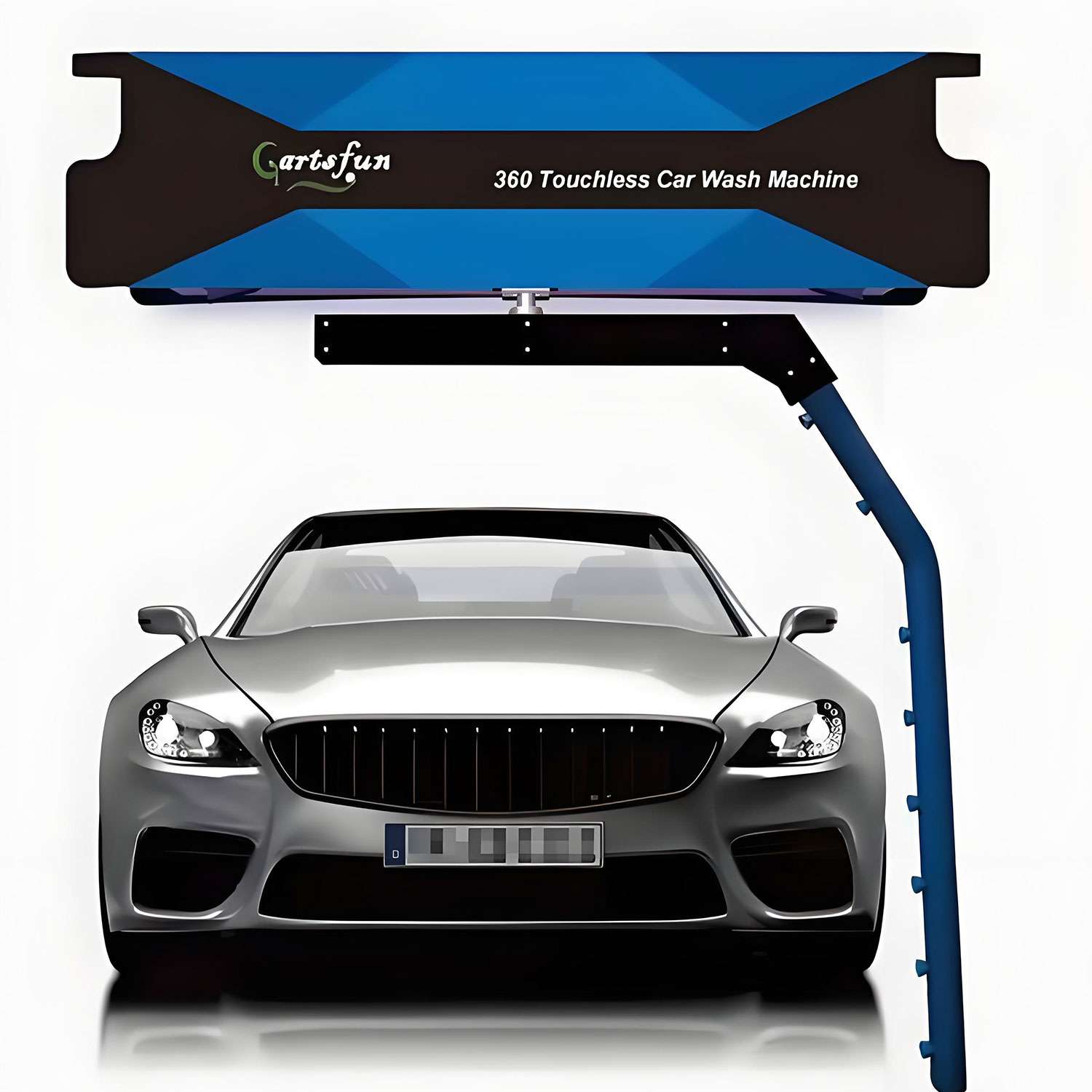
A touchless car washing machine is designed to clean vehicles without any physical contact with the car body during the washing process. This method aims to prevent scratches and damage that can occur with traditional car washing methods that use brushes or other physical media.
Effect of Touchless Car Washing
1.Cleaning Effect
Generally Good Cleaning: Touchless car washing machines effectively clean oil, stains, mud, and surface oxides from the car body, including hard-to-reach areas like gaps and tires. They can efficiently remove dust and light stains that accumulate during daily driving, addressing issues like stale dirt and thick surface oxides that traditional methods may leave behind. For example, urban commuting vehicles often see improved results with touchless washing for light dust and minor stains .
Certain Limitations: However, if the dust is thick or the stains are particularly stubborn—such as those found on vehicles that haven’t been washed in a long time or those heavily soiled from off-road conditions—touchless washing alone may not suffice. In such cases, manual assistance may be necessary to achieve a thorough clean.
2.Impact on Vehicle Appearance
Protecting Car Paint: Since touchless washing eliminates physical contact with the car body, it significantly reduces the risk of scratches on the paint surface. Many touchless car washes utilize special detergents and purified water that meet drinking standards, which helps maintain the car paint’s condition and often results in a bright, clean finish after washing.
Cleaning Vehicle Gaps: Touchless washing is effective at removing dust, mud, and sand from the gaps in the car body, thereby reducing dirt accumulation. However, for stubborn stains located in very small gaps, additional manual cleaning may be required.
3.Waxing Care Effect
Some touchless car washes include a final step of crystal wax spraying, which forms a protective film on the car’s surface. This not only enhances the shine of the car paint but also provides a degree of protection against external pollutants.



 English