

Automatic car wash machines, a key category of computer-controlled car wash systems, are widely used due to their high level of automation and reliable performance. To make an informed purchasing decision, it is essential to understand the core technologies behind these machines. This article focuses specifically on automatic car wash machine control systems, while also covering brush design, motor protection, and structural integrity.
Automatic Car Wash Machine Control Systems: PLC vs. Microcontroller
The automatic control system of a car wash machine mainly falls into two types: PLC technology and microcontroller technology. A common misconception is that a microcontroller has a CPU while a PLC does not – this is incorrect. In fact, a PLC has its own CPU module. Both technologies rely on sensors to detect vehicle contours.
PLC operation principle: PLC systems use current sensors and photoelectric sensors to convert brush pressure into electronic signals, which are sent to the CPU to sense the shape of the vehicle body.
Microcontroller operation principle: Microcontroller systems use infrared sensors to identify obstacles and transmit the information as electronic signals to the CPU.
When comparing the two, PLC technology offers easier maintenance, faster initial development, and stronger anti-interference capability. Its disadvantages are higher cost and larger space requirements. On the other hand, microcontroller technology occupies less space and is more affordable, but it has a longer development cycle and weaker anti-interference performance. High-end automatic car wash machines worldwide typically use either PLC or microcontroller control systems – the choice depends on your budget, maintenance expectations, and available site space.
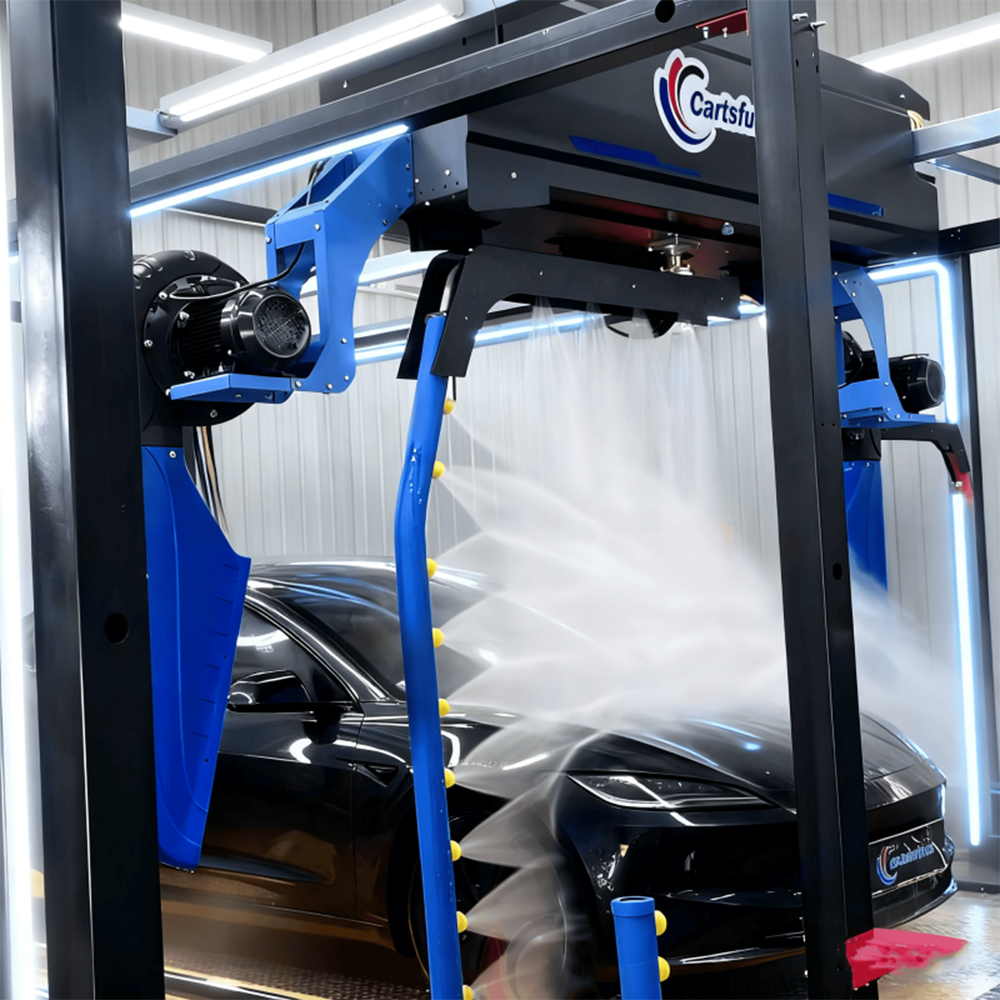
Do Brushes Damage Paint? The Opposite Is True
Many users worry that rollover car wash machines with brushes will scratch the paint. In reality, while driving, a vehicle accumulates dust and grime on its paint surface due to friction with the air. Over time, this forms a dense film that continuously causes micro-scratches to the paint. High-pressure water alone cannot remove this film.
Brush-equipped car wash machines effectively solve this problem: the brushes are made of high-quality composite materials. They gently and evenly remove the harmful film without damaging the paint surface. Therefore, a well-designed brush system actually protects the paint rather than harming it.
Motor Selection: Waterproof Rating Is Critical
The working environment of an automatic car wash machine demands a waterproof motor. The vast majority of reliable machines use motors with an IP55 waterproof rating. However, beware of inferior products that do not use genuine waterproof motors – instead, they wrap ordinary motors with a thin plastic film to simulate waterproofing. Such practices lead to poor quality and inadequate moisture protection.
A high-quality motor is so durable that, theoretically, even if the rest of the machine breaks down, the motor will still function properly. When evaluating car wash equipment, always confirm that the motor has a genuine IP55 or higher waterproof rating.
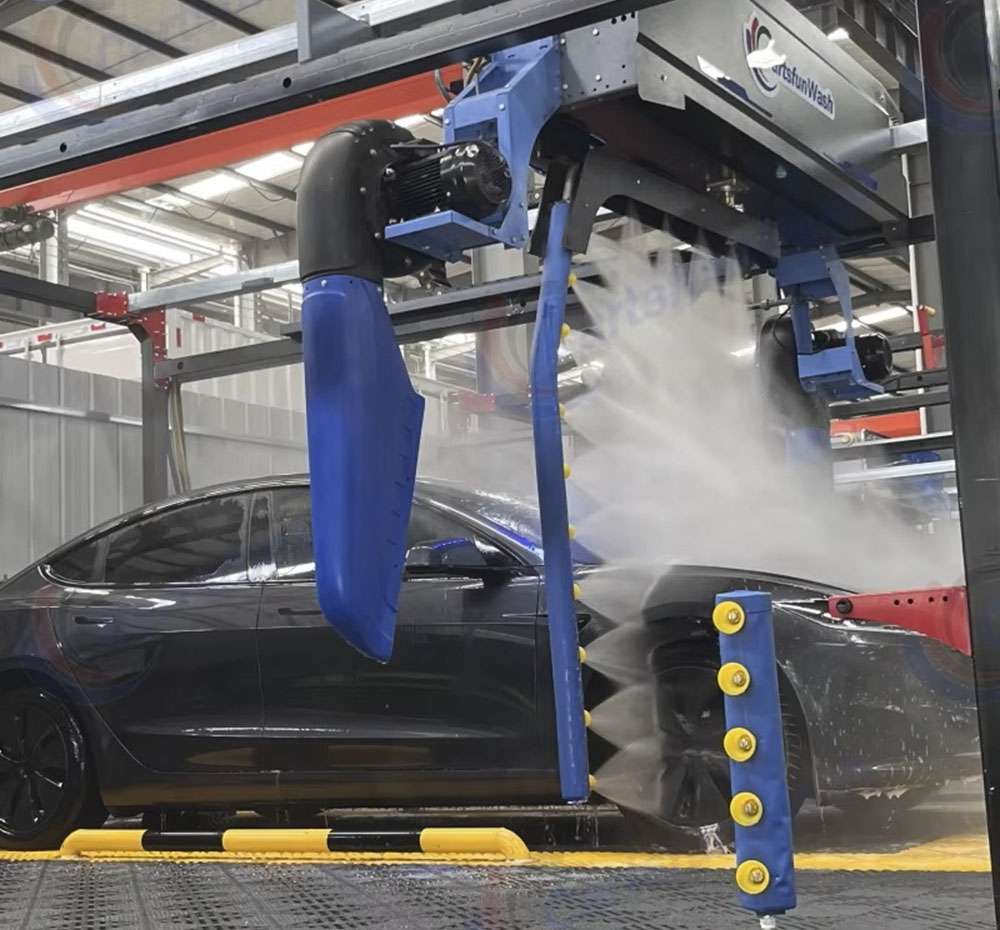
The Most Important Hardware Component: Not the Motor, Not the Brushes
Many users assume the motor or brushes are the most critical parts. In fact, the frame (structural chassis) of the automatic car wash machine is the most vital hardware component.
Why? During operation, the machine must follow a strictly level path. Any deviation affects cleaning performance and safety. Therefore, manufacturers must rigorously control the precision and rigidity of the frame. A strong, accurately manufactured frame provides the foundation for all other components – including the automatic car wash machine control system – to work reliably over the long term.
Get In Touch With Us



 English