
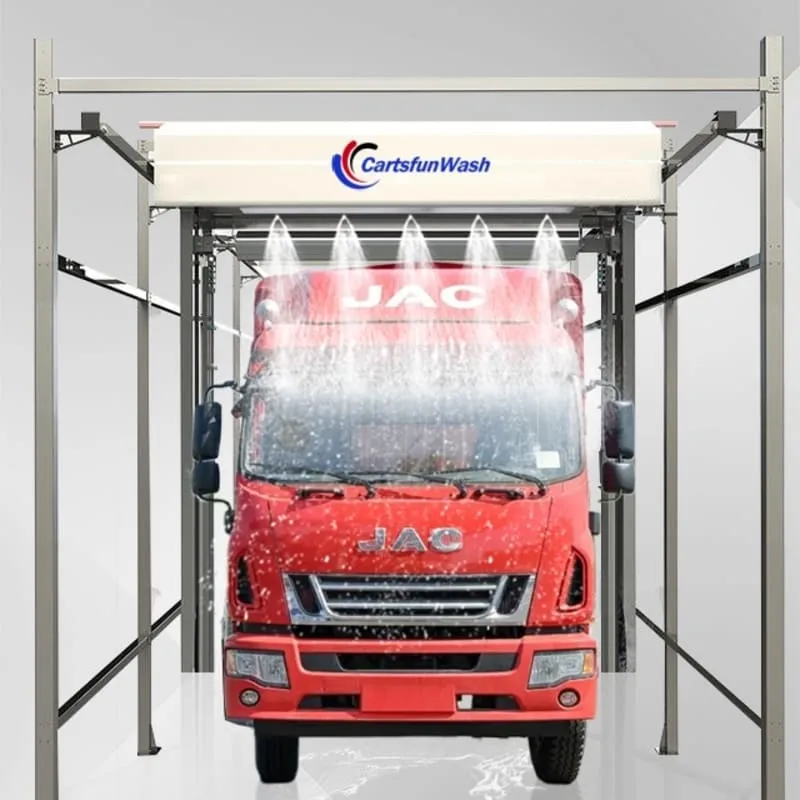
For bus companies, transit depots, and logistics fleets, cleaning large vehicles has always been a headache. Doing it by hand eats up hours – a fleet of 30 buses can easily keep staff working past midnight. Traditional brush systems are faster, but they often scratch the paint. And with new energy buses sporting special coatings, many operators simply don’t want to take the risk.
That’s where the touchless bus washer comes in. It cleans without any physical contact, using smart technology and high‑pressure water to get the job done quickly and safely. No more overnight shifts just for washing, and no more worrying about damaged paint.
Three Big Wins
No scratches, safe for all vehicles
Instead of rotating brushes, this system relies on high‑pressure water jets and a neutral detergent blend. Since nothing touches the bodywork, there’s zero risk of swirl marks or scratches. That makes it perfect for new energy buses, premium coaches, and any fleet that cares about keeping its vehicles looking sharp.
Fast cleaning, minimal downtime
A single bus goes from entry to finished wash in about two to three minutes. With multi‑lane setups, you can easily wash over 200 vehicles per day. The real beauty? You can schedule all cleaning at night, so buses are ready to roll first thing in the morning without missing a single trip.
Smart and low‑maintenance
Add an optional license plate recognition module, and the system starts automatically as each bus pulls in. No dedicated attendant needed. Remote monitoring lets one person oversee multiple lanes from an office – that cuts labor costs significantly.
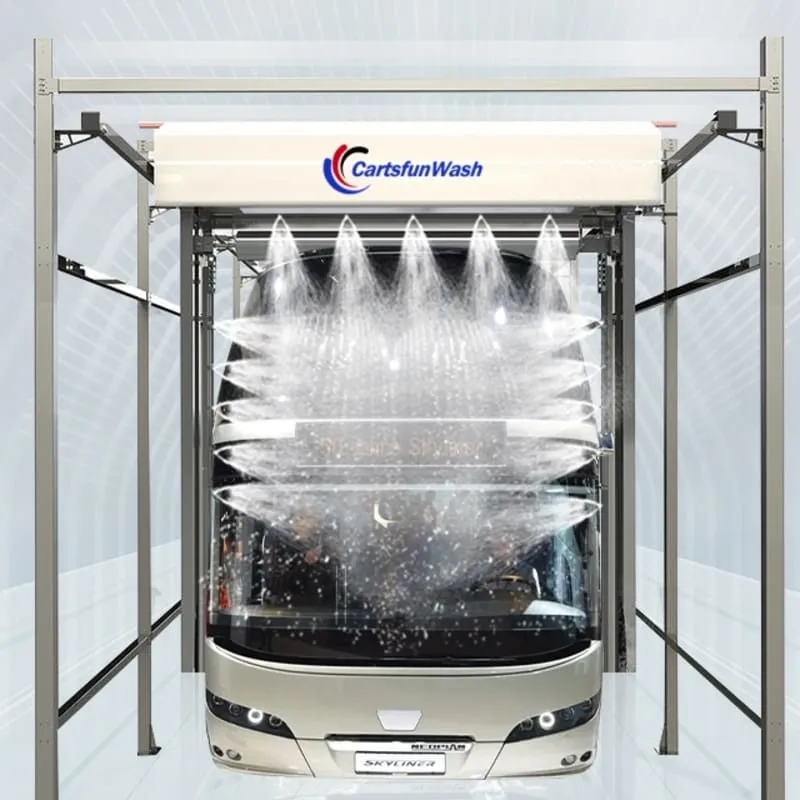
How touchless cleaning actually works
Unlike conventional rollover washers that rely on brushes, this machine uses structured water jets and specially formulated cleaners. The process is straightforward but precise:
First, infrared sensors measure the vehicle’s height, width, and length. The system then adjusts its nozzles on the fly – whether it’s a standard bus, an articulated coach, or a heavy truck. Next comes a pre‑rinse with high‑pressure water to blast off loose dirt, mud, and road grime. After that, a neutral, eco‑friendly detergent is sprayed to break down stubborn stuff like grease, oil, insect residue, and road salt. Finally, a powerful rinse removes every trace of detergent, and strong air dryers leave the surface spotless – no streaks, no water spots.
Key features worth knowing
Infrared detection – This isn’t just a gimmick. The sensors ensure the machine adapts to each vehicle’s exact shape, so coverage is complete even around mirrors, bumpers, and roof hatches.
Water recycling – A built‑on recycling system filters and reuses up to half the water from every wash cycle. That lowers water bills and helps meet environmental goals.
Compact, modular design – Many depots and warehouses are tight on space. This system can be installed in cramped yards or retrofitted into existing facilities without major demolition.
Remote diagnostics – The machine sends real‑time status updates and alerts. If something goes wrong, operators get a notification immediately and can often troubleshoot remotely, minimizing downtime.
Emergency safety – Integrated emergency stops and automatic fault detection mean the machine shuts down instantly if it senses an obstacle or abnormal condition.
Who should consider this?
Public transit operators – City and private bus depots often manage dozens or hundreds of vehicles. Clean buses improve public confidence and meet health standards. This system can easily wash 50+ buses daily, slashing labor hours.
Trucking and logistics companies – Long‑haul trucks face mud, salt, and bugs constantly. Regular cleaning protects the brand image and keeps safety decals visible. Even with tight schedules, a touchless system gets the job done fast.
Service stations and commercial car washes – Adding a touchless bus washer allows you to attract high‑value commercial customers – tour operators, school bus fleets, shuttle services. It’s a clear upgrade over basic washes and creates a new revenue stream.
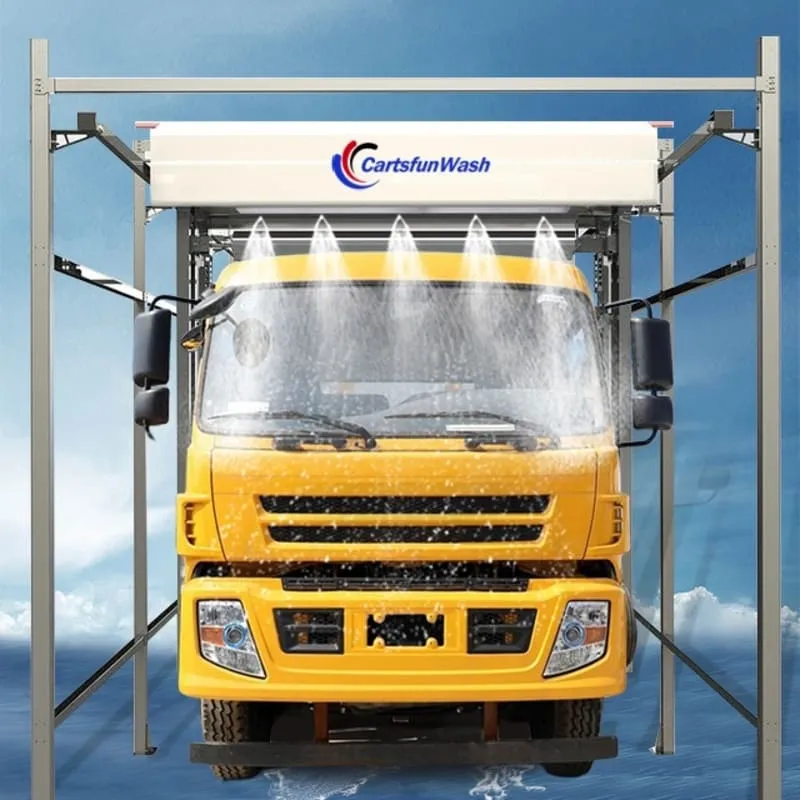
Does it pay off?
Look at the numbers. Labor costs can drop by more than 60%. Throughput goes up – you’re no longer the bottleneck in fleet operations. Maintenance is minimal because there are no brushes to replace and fewer moving parts to wear out. The water recycling system cuts utility bills over time. And clean vehicles keep customers happy, which helps renew contracts.
For a medium‑sized fleet, the initial investment typically pays for itself within one to two years, depending on local labor and water costs.
Why go touchless?
Vehicle designs are getting more complex. New energy buses have delicate coatings. Customers expect faster service and zero damage. Old‑school washing – whether by hand or with brushes – just doesn’t cut it anymore.
A touchless bus washer combines speed, safety, and intelligence. It’s a future‑proof solution that protects your fleet, reduces operating costs, and keeps your operation running smoothly. For any business that takes efficiency and asset care seriously, it’s one of the smartest investments you can make.
Get In Touch With Us


 English