

In the automatic car wash industry, a common misconception persists: “physical contact is necessary for a thorough clean.” This belief has long established massive tunnel brush systems as the epitome of efficient cleaning. However, with technological advancements and evolving user awareness, we are witnessing a quiet revolution in car wash philosophy. Touch-free automatic systems, utilizing precision high-pressure water and specialized chemicals, are demonstrating superior performance across multiple key dimensions by redefining what “effective cleaning” truly means.
Core Advantages Analysis
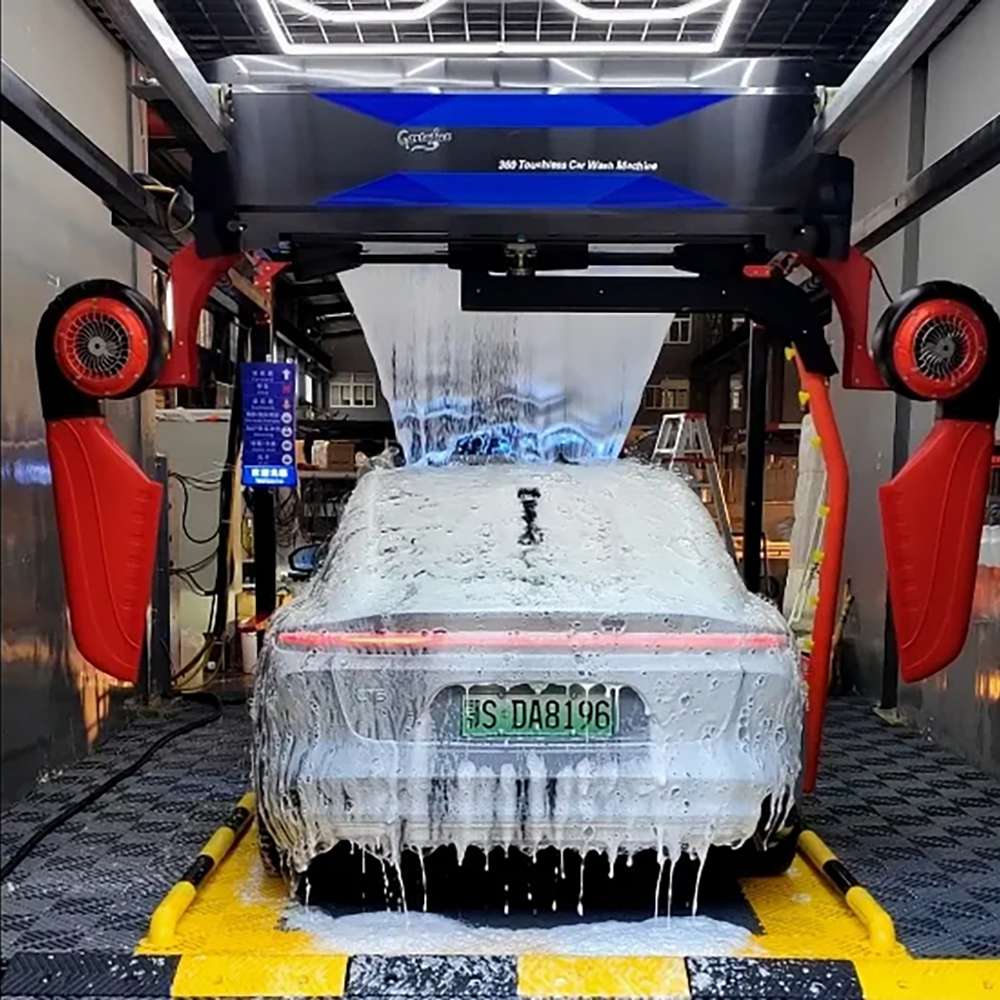
1. Superior Paint Protection
Tunnel brush systems pose a significant risk of paint damage. When cleaning heavily soiled vehicles, the rotating brushes can trap abrasive particles like sand and grit against the paint surface. These particles act like sandpaper, causing micro-scratches, swirl marks, and other finish damage. In contrast, touch-free systems eliminate physical contact entirely, relying on high-pressure water and specialized cleaning agents to remove dirt, thereby completely avoiding this type of abrasion.2. Significant Cost Efficiency
The financial advantage of touch-free systems is substantial. The initial investment for a touch-free system is around $13,800, while a basic tunnel brush system starts at approximately $27,500, with high-end models reaching $55,000 or more. Operational costs further highlight this disparity; annual maintenance for a touch-free system is typically under $275, compared to over $1,370 for tunnel systems, which also require more frequent and costly part replacements.3. Enhanced Reliability and Lower Maintenance
Touch-free car washes, often featuring specialized motors and suspended designs, boast significantly lower failure rates. Tunnel systems, which rely on ground-mounted track and chain drives constantly exposed to water and moisture, are prone to rust, corrosion, and breakdowns, leading to higher downtime and repair costs.4. Superior All-Weather Operation
Tunnel brush systems face operational challenges in cold climates. The brushes can freeze, rendering them unusable and potentially increasing the risk of damage to a vehicle’s surface. Touch-free systems easily mitigate this risk with simple drainage and anti-freezing measures, ensuring reliable, year-round operation.5. Greater Customer Acceptance and Trust
Market trends show growing customer preference for touch-free cleaning. Particularly among owners of premium vehicles, there is considerable reluctance to use tunnel brush systems due to widespread awareness of potential paint damage, making touch-free the preferred choice for careful car owners.6. Optimal Space Utilization
Touch-free car washes require a compact footprint of only 21-25 square meters, offering significant flexibility for installation. Tunnel systems demand considerably more space, which can be a critical constraint and a less efficient use of valuable commercial property.
Conclusion
When evaluated comprehensively on cleaning efficacy, operational reliability, long-term costs, and customer satisfaction, touch-free automatic car wash systems present a compelling and superior value proposition. They not only redefine the standard of “clean” but also represent a more sustainable and forward-looking direction for the industry. For investors seeking stable long-term returns and car owners dedicated to preserving their vehicle’s finish, touch-free technology stands out as the unequivocally smarter choice.
Get In Touch With Us




 English