
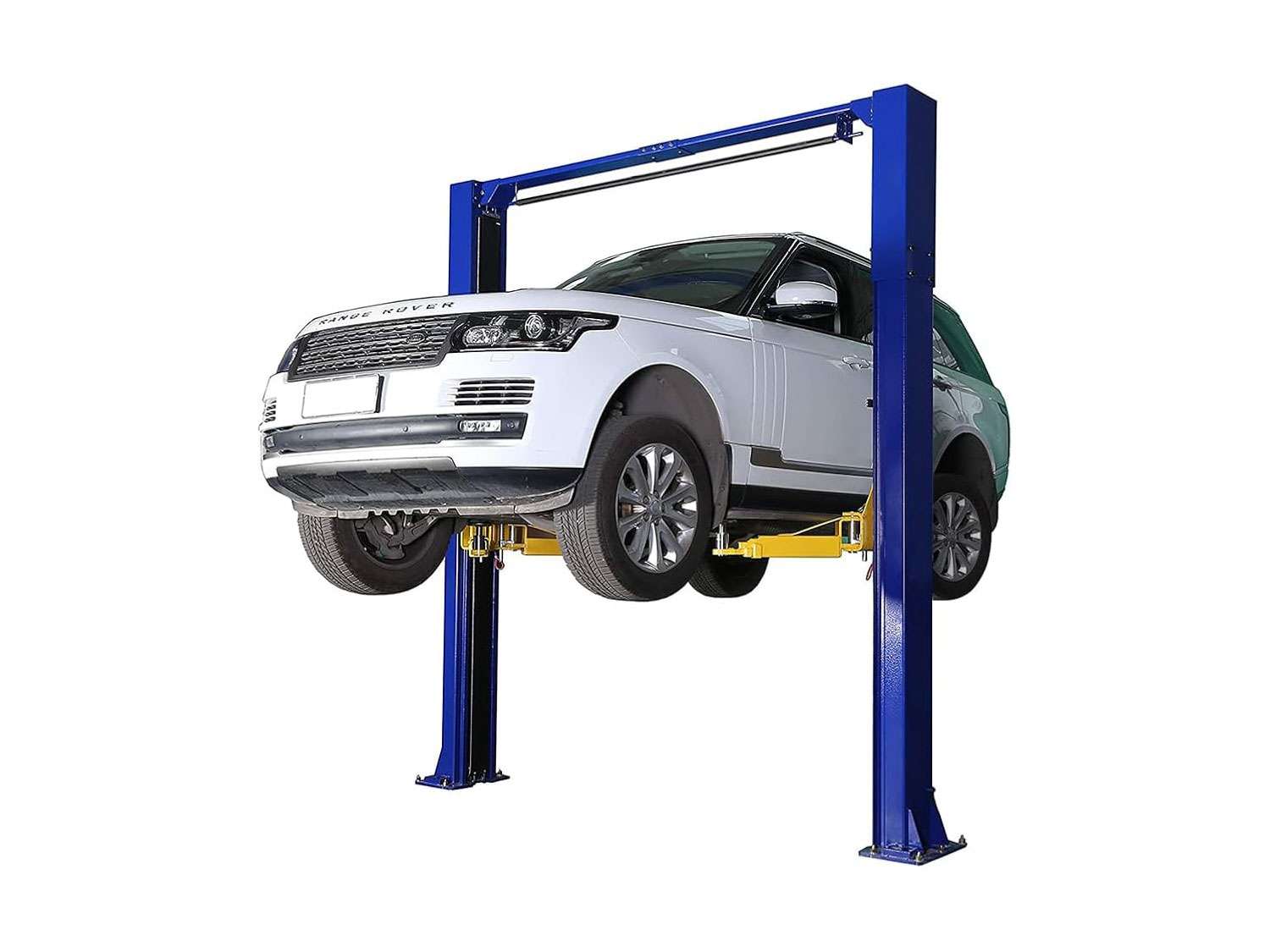
An auto lift refers to a car maintenance device used in the automotive repair industry to lift vehicles. Lifts play a vital role in car repair and maintenance, providing significant assistance in vehicle repairs and tire positioning adjustments. Whether it involves a major vehicle overhaul or minor repair and maintenance tasks, auto lifts are indispensable. The quality and nature of these products directly impact the safety of maintenance personnel. In maintenance and repair businesses of various sizes, such as comprehensive repair shops handling various vehicle models or specialized businesses like tire shops, almost all are equipped with auto lifts.
How many types of auto lifts are there?
According to the structural design, there are primarily single-column lifts, double-column auto lifts, four-column auto lifts, scissor auto lifts, and trench aoto lifts.
1.Single-post Auto Lift:
A single-post lift is specialized equipment used to elevate vehicles, such as cars parked on the ground, to a certain height for maintenance purposes. It is commonly used for partial lifting tasks on cars and engineering vehicles to replace wheels, tires, or conduct various maintenance operations on the vehicle chassis. Single-post lifts are easy to operate, aesthetically pleasing, space-efficient, and facilitate convenient and labor-saving lifting of heavy objects. They save time and effort, and when not in use, they can be completely lowered to the ground, allowing for easy vehicle maneuvering and item placement. Single-post vehicle lifts are categorized into movable and fixed types, with movable lifts suitable for indoor and outdoor use, while fixed lifts are ideal for indoor spaces with limited area.
2.Two-post Auto Lift:
A two-post car lift is a specialized mechanical lifting device commonly used in automotive repair and maintenance facilities. It is extensively employed in servicing small vehicles such as cars. The two-post car lift lifts the vehicle into the air, saving ground space and facilitating ground-level operations. However, to minimize material usage, the two-post car lift typically does not include a bottom plate. Consequently, the torque of the column must be counterbalanced by the ground, necessitating stringent foundation requirements. Symmetrical and asymmetrical are the two types of two-post lifts.
3.Four-post Auto Lift:
The four-post car lift is a specialized mechanical lifting tool commonly utilized by repair and maintenance units handling large-tonnage cars or trucks. It is well-suited for four-wheel alignment tasks, as most four-post lifts are equipped with alignment gear to ensure levelness. Four-post lifts come in upper cylinder and lower cylinder configurations based on their structure. The upper cylinder type relies on four chains to elevate the vehicle’s four corners, with the tension cylinder located at the top. On the other hand, the lower cylinder type utilizes four thick steel cables to lift the vehicle, with the tension cylinder positioned beneath the flat plate. The upper cylinder type has a simple structure but increased dead weight, while the lower cylinder type is more compact with lower dead weight.
4.Scissor Auto Lift:
Scissor lifts employ a scissor-type stacking rod form and an electric drive mechanical transmission structure. They are widely used in large vehicle maintenance tasks. Scissor lifts offer moderate lifting speeds without requiring pit installation, making them ideal for fixed vehicle models with high work intensity, such as buses. Scissor lifts come in various types, including large scissor lifts (mother-child type), small scissor lifts (single scissor lifts), and ultra-thin series scissor lifts, each catering to specific maintenance needs.
5.Trench Auto Lift:
A trench lift is a practical equipment choice for large-scale passenger vehicle maintenance in workshops with limited space. It is cost-effective and operates above the trench on two side tracks. Typically driven by an electric mechanism with worm and worm gear speed reduction, the trench lift features stable lifting, increased lifting force, and convenient operation and installation. This type of lift is highly suitable for maintenance companies specializing in bus and truck repairs. The trench runway type four-wheel alignment lift includes an adjustable front wheel steering plate and an extended rear wheel slide, making it suitable for various vehicle positioning and measurement tasks.
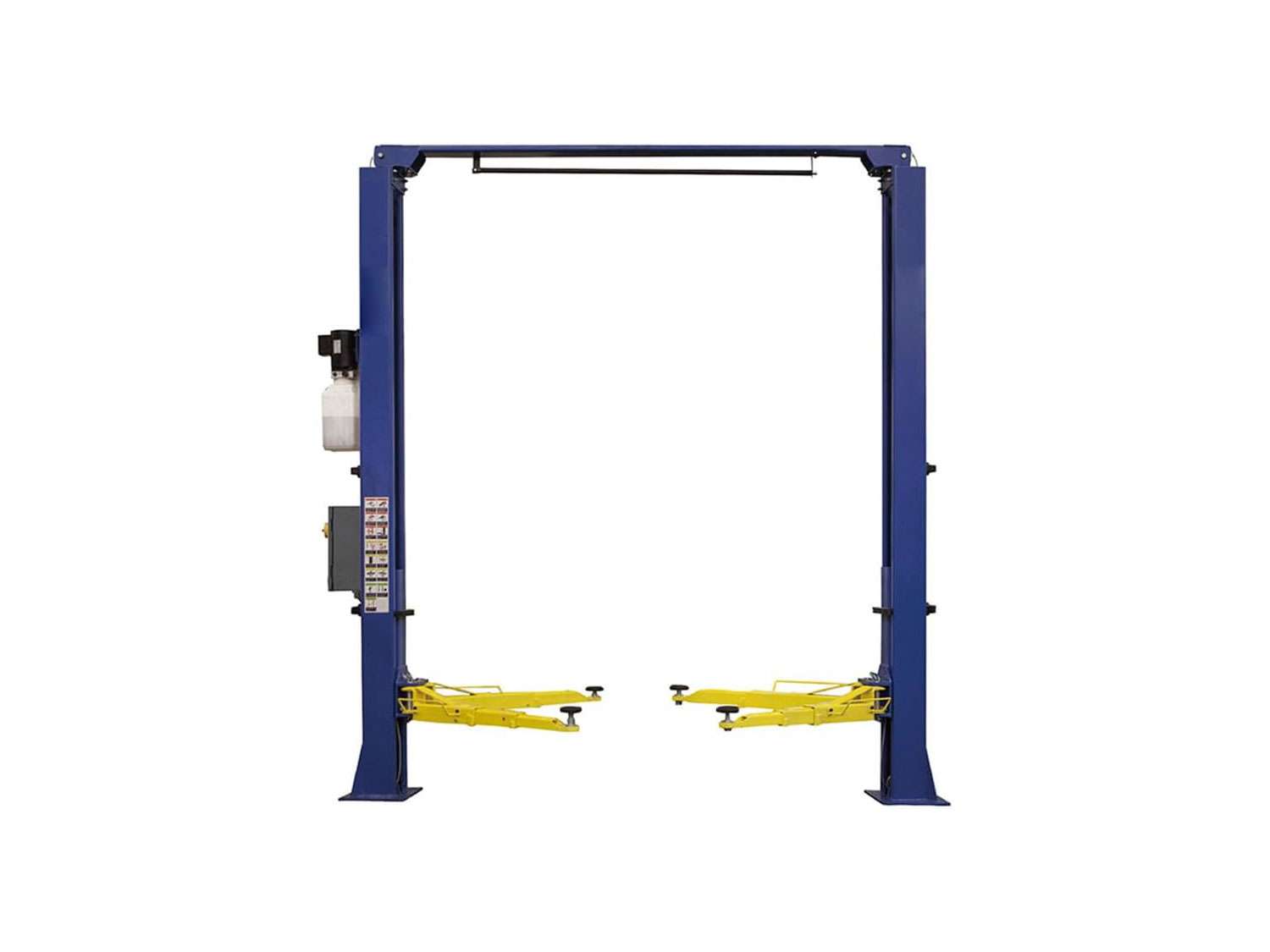
According to the drive type of the lift, they are primarily categorized into pneumatic, hydraulic, and mechanical lifts.
Hydraulic auto lifts are the most common, followed by mechanical lifts, with pneumatic lifts being the least prevalent. Hydraulic lifts are known for their stability, low noise, and high power. They have low maintenance costs, with oil cylinders often lasting 5-10 years. The development trend of lifts focuses on safety, simplicity, longevity, low noise, and affordability, making hydraulic lifts the likely future mainstream option.
1. Mechanical auto lift:
Mechanical lifts include single-motor driven screw drive lifts and dual-motor driven screw drive lifts. These lifts offer excellent synchronization, are driven by a motor and screw mechanism, eliminating oil leakage issues, and are equipped with simple self-locking protection. However, they incur high maintenance costs due to mechanical wear, with regular maintenance and part replacements costing approximately 1,000 yuan annually.
2.Hydraulic auto lift:
Hydraulic lifts are characterized by stability, low noise, and high power. While they may experience oil leakage over time, leading to environmental pollution, hydraulic lifts boast low maintenance costs and durable oil cylinders. As lifts progress towards enhanced safety, simplicity, longevity, low noise, and affordability, hydraulic lifts are poised to dominate the lift market. Hydraulic lifts are available in single-cylinder and double-cylinder variants, each offering unique advantages and application suitability.




 English