

As car owners become increasingly concerned about paint protection, maintenance costs, and convenience, brushless (or touchless) car washes are gaining popularity around the world. But what exactly is a brushless car wash? How does it work, and is it the right choice for you or your car wash business? This guide delves beyond the surface to provide a clear, detailed understanding of this technology and its practical implications.
In this comprehensive guide, we’ll explore the technology, benefits, limitations, and commercial potential of brushless car washing systems to help you make the best decision for your vehicle—or your business.
1. Core Concept: What Is a Brushless (Touchless) Car Wash?
A brushless car wash, also known as a touchless car wash, is an automated system that cleans vehicles without any physical contact from brushes, cloths, or spinning wraps. Instead, it relies on a sophisticated, multi-stage process using high-pressure water jets and specialized, chemically reactive cleaning agents to break down, lift, and remove dirt and debris from the vehicle’s surface.
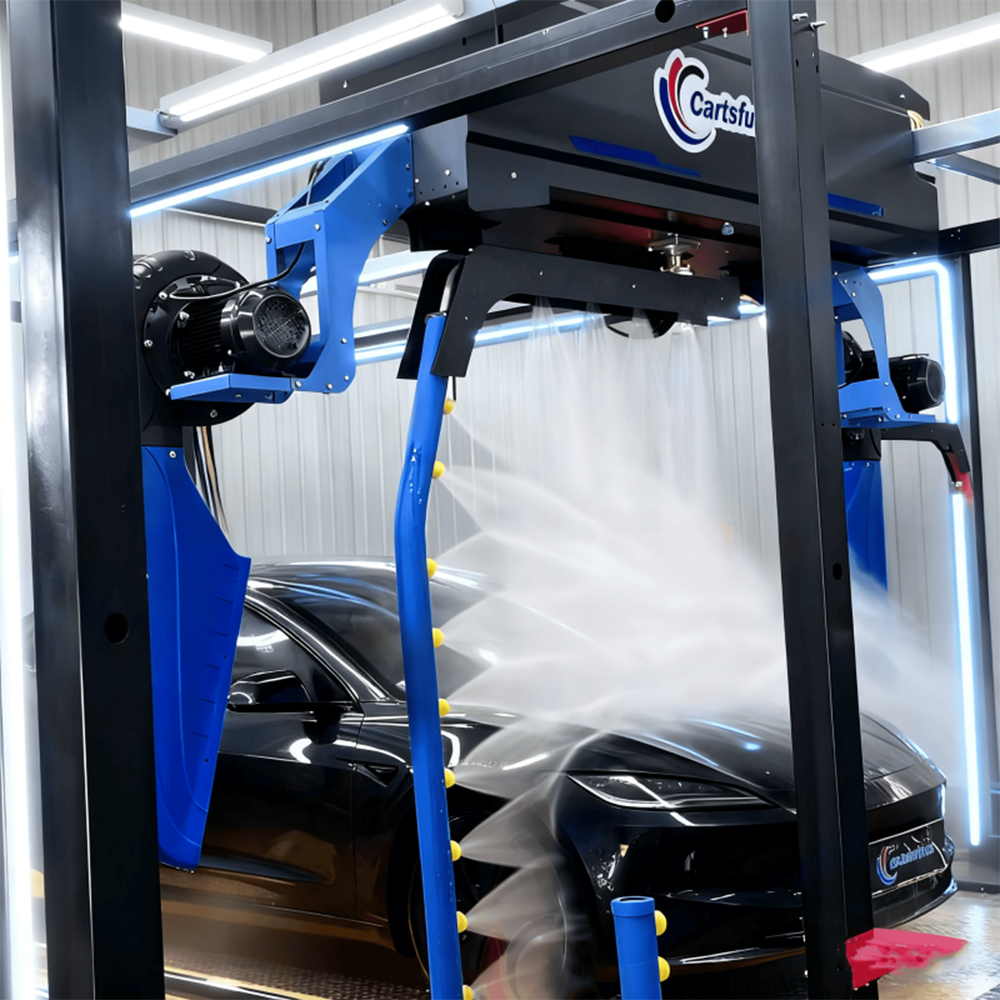
How It Differs from Traditional Car Washes:
| Traditional Wash | Brushless Wash |
|---|---|
| Uses rotating brushes or cloth strips for mechanical scrubbing. | Uses a no-touch cleaning process with precise chemistry and hydraulic force. |
| Higher risk of instilling fine scratches or swirl marks over time. | Safer for paint, especially critical for luxury, ceramic-coated, or matte-finish vehicles. |
| May clean heavy, caked-on dirt faster due to physical agitation. | Gentler; requires proper chemical dwell time to break down contaminants before rinsing. |
| Regular brush maintenance and replacement is necessary. | Maintenance shifts to chemical systems, pumps, and sensors. |
The Primary Goal: Paint Protection
The core advantage of brushless washing lies in its foundational principle: paint preservation. By eliminating abrasive contact, it protects your car’s factory clear coat, aftermarket paint protection film (PPF), vinyl wraps, and ceramic coatings from the cumulative micro-damage caused by friction-based washing.
2. How It Works: The Technology Behind Brushless Car Washing
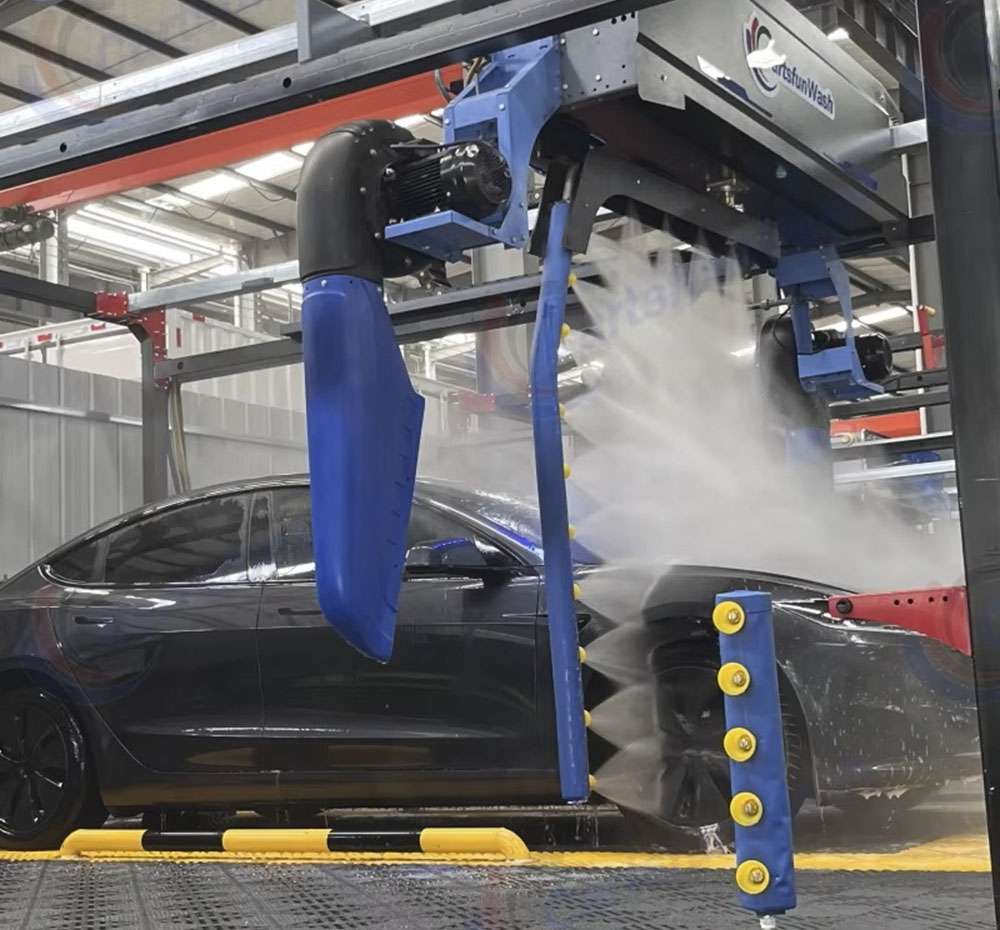
A modern brushless car wash operates through a precisely timed sequence, typically in these main stages:
✅ Step 1: Chemical Pre-Soak & Reaction
This is the most critical phase. Specialized detergents—often a sequence of alkaline (to break down organic matter like bugs and tree sap) and acidic (to dissolve mineral deposits like brake dust and hard water spots) solutions—are applied as a thick foam or low-surface-tension liquid. These chemicals work by reducing the adhesion between contaminants and the paint, effectively “loosening” the dirt.
✅ Step 2: High-Pressure Water Rinse
Once the chemicals have had time to react (dwell time), powerful, targeted water jets (typically operating between 800–1200 PSI) sweep across the vehicle. Guided by infrared or LiDAR sensors that map the car’s size and shape, the nozzles maintain an optimal distance. This high-pressure rinse hydraulically shears away the now-suspended grime.
✅ Step 3: Spot-Free Rinse & Air Dry
To prevent water spots, a final rinse uses deionized or reverse osmosis (RO) purified water, which lacks the minerals found in tap water. This is often followed by high-powered air dryers or shearing air knives that blow remaining water droplets off the surface without any towel contact.
Core Components of a Professional System:
High-pressure triplex plunger pumps and stainless steel nozzles.
Programmable chemical injection and dosing systems.
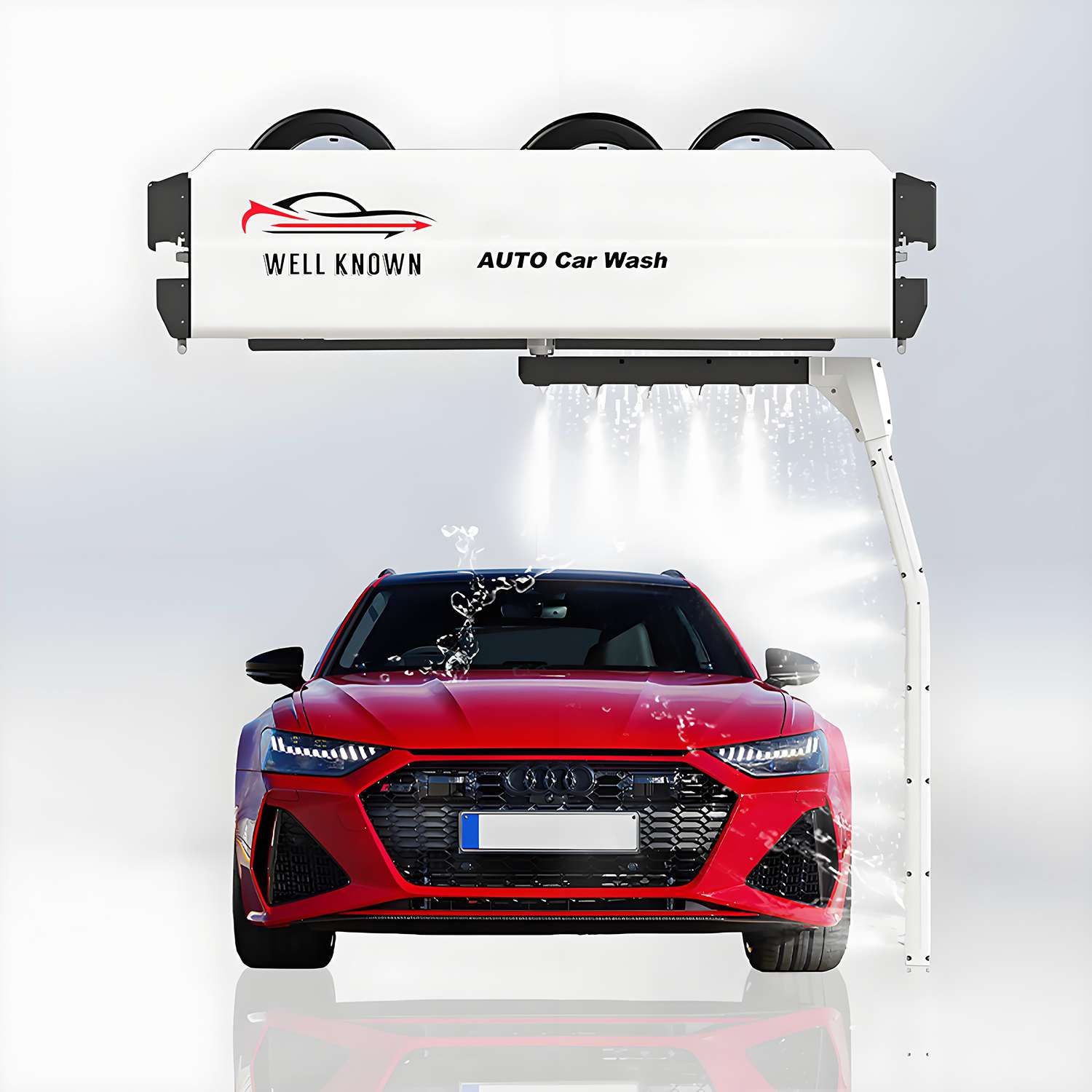
Sensor-guided moving arches or gantries.
Spot-free water purification units.
Industrial-grade air dryers or blower systems.
A central Programmable Logic Controller (PLC) that orchestrates the entire cycle.
3. Will It Damage My Paint? Addressing the Top Concern
One of the most common questions drivers have is: “Is touchless washing really safe for my vehicle’s paint?” The short answer is yes, when performed correctly, it is one of the safest automated methods available.
✅ Key Safety Advantages Over Traditional Brushes:
Zero Physical Contact: This is the fundamental benefit, eliminating the primary cause of swirl marks and scratches.
Ideal for Modern Finishes: Perfectly safe for ceramic coatings, matte paint, vinyl wraps, and vehicles with sensitive sensors or radar components.
Consistent and Controlled: The process is automated, removing variables like operator error or dirty wash media.
Important Considerations & Limitations:
Chemical Dependency: The cleaning power hinges on the strength and formulation of the chemicals. Overly harsh chemicals, if not properly rinsed, could over time degrade trim or affect certain plastics. Reputable systems use balanced, vehicle-safe formulations.
Limitation on Extreme Dirt: While excellent for daily road film, it may require a pre-rinse or manual touch-point for extremely thick, caked-on mud.
System Maintenance: For optimal safety and results, the system’s chemical dilution ratios, nozzle alignment, and water purification must be meticulously maintained by the operator.
4. Business View: Commercial Advantages of Brushless Systems
For car wash operators, investing in a brushless system is a strategic decision to capture a growing market segment that prioritizes safety and technology.
Key Business Benefits:
Reduced Operational Complexity & Cost: Fewer moving parts (no brushes, cloths, or wraps) mean lower long-term maintenance and replacement costs.
Higher Throughput Potential: Faster, automated cycles allow more cars to be washed per hour, maximizing revenue during peak times.
Lower Liability Risk: The significant reduction in potential for wash-induced paint damage leads to fewer customer claims and can lower insurance premiums.
Strong Market Positioning: Enables branding as a premium, paint-safe destination, attracting owners of newer, luxury, and specialty vehicles willing to pay more for guaranteed safety.
Sustainability Story: Modern systems are designed for efficiency, often incorporating water reclamation and precise chemical dosing, which appeals to eco-conscious consumers.
5. In-Depth Comparison: Brushless vs. Friction-Based Car Washes
| Feature | Traditional Friction Wash | Brushless / Touchless Wash |
|---|---|---|
| Cleaning Mechanism | Physical scrubbing with brushes/cloths. | Chemical reaction + high-pressure hydraulic shearing. |
| Cleaning Power on… | Heavy, Caked-on Dirt: Very effective. | Surface Dirt & Road Film: Excellent. Baked-on Mud: May require pre-treatment. |
| Paint Safety | Moderate to high risk of micro-scratches over time. | Very high; virtually no risk of contact-induced swirls. |
| Maintenance Focus | High (brush wear, alignment, cloth replacement). | Lower mechanical, higher focus on chemical/pump systems. |
| Target Customer | Budget-conscious, values vigorous cleaning. | Paint-conscious, owns newer/ luxury/ coated vehicles. |
| Perceived Value | Functional clean. | Premium, protective service. |
6. Subtypes: Touchless vs. Soft-Touch Hybrid Systems
The term “brushless” can encompass two distinct technologies in the market:
1. Pure Touchless Wash (Fully Contact-Free)
Method: Relies exclusively on high-pressure water and specialized chemicals. No part of the machine touches the car.
Best For: New cars, luxury vehicles, ceramic-coated cars, matte finishes, and vinyl wraps. Ideal for the most paint-conscious owners.
2. Soft-Touch Hybrid Wash (Minimal Contact)
Method: Uses soft foam wraps or hanging microfiber cloths in combination with chemicals and water. The contact is gentle and designed to be non-abrasive.
Best For: Owners who want a balance between touchless safety and stronger cleaning power for more stubborn dirt, or for vehicles in regions with heavy soil conditions.
7. Frequently Asked Questions (FAQ)
Is it safe for all vehicle types, including classic cars?
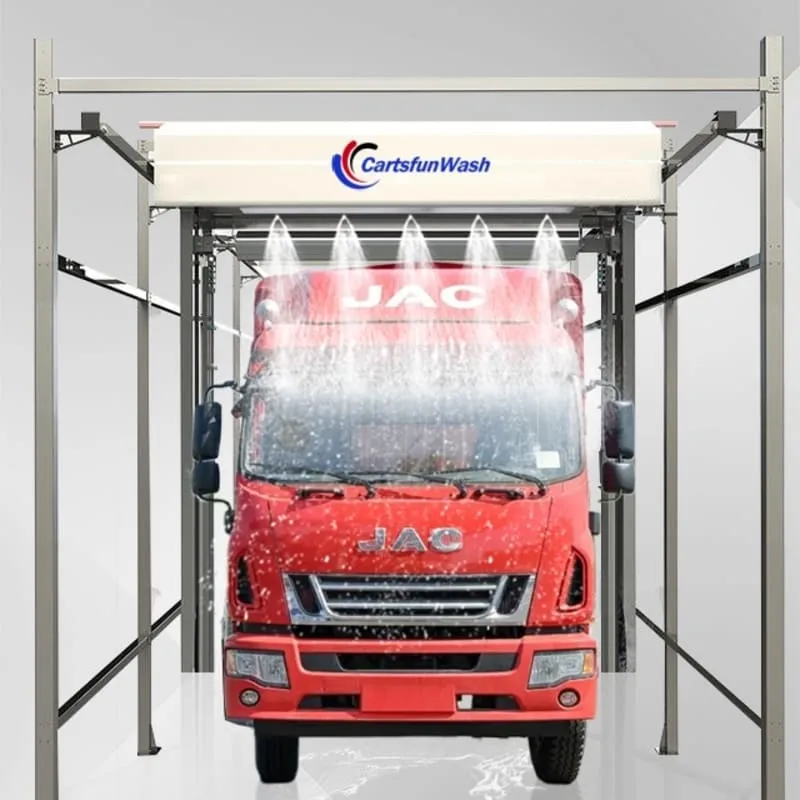
Yes. Touchless systems are universally safe for all exteriors, from daily drivers to SUVs, trucks, and delicate classic or exotic cars, as there is no contact to damage fragile original paint or trim.
How often can I safely use a brushless car wash?
You can use it frequently, even 1–2 times per week, as it does not inflict wear. The frequency is more dependent on your need for cleanliness and the quality of the chemicals used at the specific wash location.
Will it effectively clean wheels and the undercarriage?
Professional systems are often equipped with dedicated wheel blasters (targeted high-pressure nozzles) and undercarriage spray systems to tackle brake dust and road salt effectively.
What should I do if my car has heavy, dried mud?
For extreme cases, a manual pre-rinse at a self-service bay to knock off the bulk of the mud is recommended before entering the automated touchless tunnel for a complete, safe clean.
Get In Touch With Us



 English