

As the demand for scratch-free and paint-safe car wash solutions grows, more business owners are investing in touchless car wash systems in 2026. But what is the real cost of launching or upgrading to a high-quality, automated, touchless wash system?
In this investor’s guide, we’ll break down the total cost of a touchless car wash, explore factors that influence pricing, and show you how to calculate your return on investment (ROI).
Understanding the Total Investment in a Touchless Car Wash System
When calculating the cost of a touchless car wash system, you must consider more than just the machine. The full investment includes both significant upfront capital and predictable recurring costs. A common mistake is to budget strictly for equipment, only to be strained by unexpected site work or higher-than-anticipated monthly chemical usage. Your total financial commitment spans:
Equipment and hardware
Installation and site preparation
Chemicals and consumables
Utilities and maintenance
Software, automation features, and potential labor
Depending on your goals and location, the total investment range in 2026 is typically between $75,000 and $300,000 USD. This wide spectrum accounts for a basic retrofit in an existing structure versus a ground-up build with premium automation on a challenging lot.
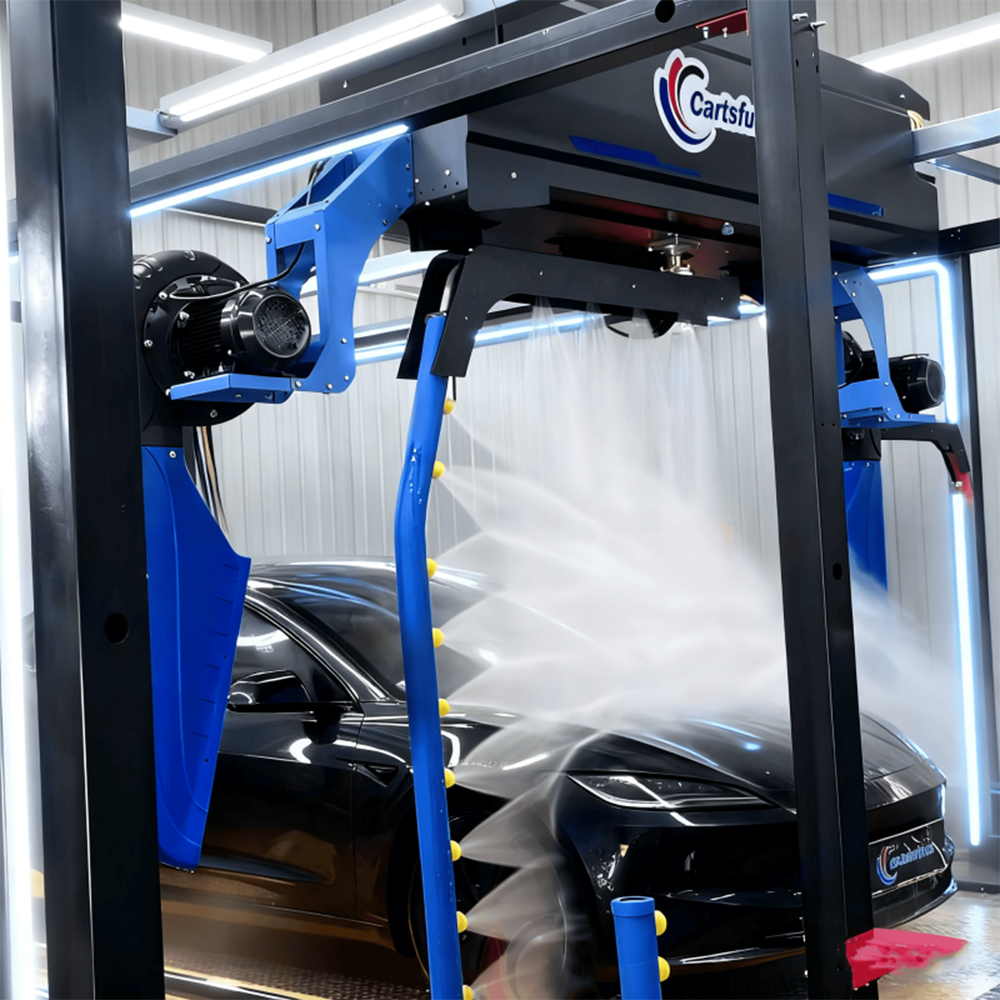
Cost Factor 1: Touchless Car Wash Equipment and Hardware
Your car wash equipment will be the largest portion of your investment. Costs vary based on system type, automation level, and brand reputation. In 2026, the difference between price tiers is increasingly defined by “smart” features that directly impact long-term operational efficiency and customer satisfaction.
Long-tail keywords included:
“touchless car wash equipment cost 2026”, “automatic touch-free car wash system”
Typical Equipment Options in 2026:
| System Type | Average Cost (USD) | Key Considerations |
|---|---|---|
| Basic In-Bay Touchless Unit | $50,000 – $90,000 | A reliable entry point. Ideal for lower-volume sites or complementary to an existing service mix. May lack advanced efficiency controls. |
| Mid-Level Automated System | $90,000 – $150,000 | The value sweet spot. Typically includes sensor-guided cleaning for consistency, smart chemical dosing to reduce waste, and more efficient dryers. These features lower per-wash costs. |
| Premium AI-Powered Touchless Unit | $150,000 – $250,000+ | The forefront of technology. Uses cameras/AI to adapt the wash to each vehicle’s shape and soil level, maximizing cleanliness and resource efficiency. Commands a premium service price. |
Look for features like sensor-guided cleaning, smart chemical dosing, and energy-efficient dryers to increase performance and reduce operational costs long term. Don’t forget to factor in the cost of essential add-ons like a capable point-of-sale (POS) system and customer loyalty software, which are crucial for revenue management in today’s market.
Cost Factor 2: Installation and Site Preparation Costs
Preparing your site for a new wash system may include both visible and hidden expenses. This phase is where budgets can easily inflate without proper planning. Key items often involve:
Plumbing and drainage: This isn’t just basic piping. High-volume systems require larger supply lines, and proper slope and grease interceptors for drainage are mandatory.
Electrical wiring: Modern automated systems with multiple high-pressure pumps and dryers often need a 3-phase electrical service upgrade, which can be a significant cost if not already available.
Water treatment setup: A true touchless, spot-free finish requires a Reverse Osmosis (RO) system. The unit itself and its installation can add $8,000 to $20,000+.
Structural upgrades (walls, roofing, etc.): Does the bay need reinforcement for new equipment? Is the enclosure sealed to contain mist and protect components?
Local zoning and permit fees: Never underestimate the cost and time required for building permits, environmental impact checks (for water runoff), and business licensing.
Estimated investment: $20,000 – $70,000, depending on location and scope of work. A complex greenfield site will hit the top end, while a simple retrofit will be lower.
Pro Tip: If you’re converting an existing bay, your installation costs could be significantly lower, especially if you can reuse plumbing, electrical conduits, and the basic structure. Always get a detailed site survey from your supplier.
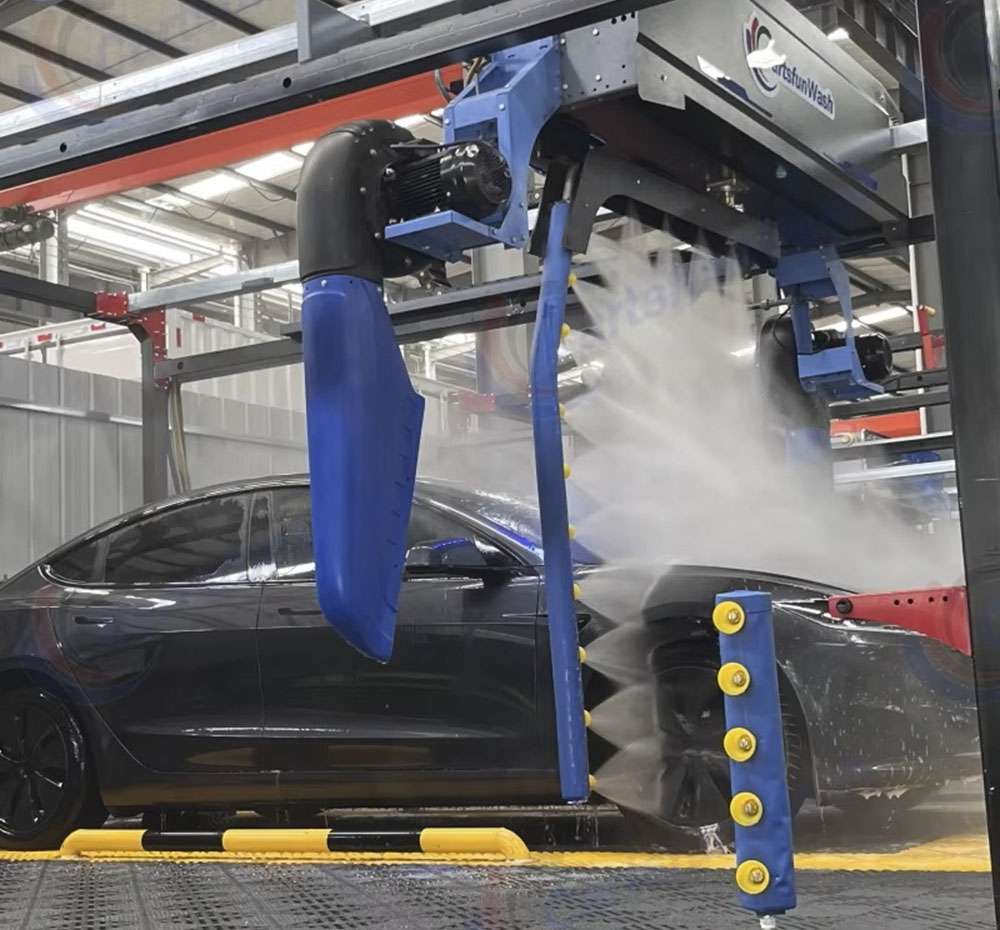
Cost Factor 3: Touchless Car Wash Chemicals and Consumables
Touchless car wash systems rely on precise chemical reactions rather than brushes for cleaning. This means your chemical program is not an afterthought—it’s a core operational cost that directly affects quality and profit. You will need a balanced arsenal:
Pre-soak detergents to loosen dirt.
Degreasers for wheels and lower panels.
High-pH detergents for the main wash.
Spot-free rinse agents (requiring RO water) for final sheeting.
Wax or ceramic coatings as profitable upsell options.
Monthly Chemical Costs by Volume:
| Wash Volume | Monthly Cost Estimate | Notes |
|---|---|---|
| 500–1,000 cars | $500 – $1,200 | Cost per car is higher at lower volumes. |
| 1,000–3,000 cars | $1,200 – $2,500 | The efficiency “sweet zone” for many operations. |
| High-volume (3,000+) | $2,500 – $4,000+ | Bulk purchasing and precise dosing are critical. |
Efficient chemical use is key to maintaining wash quality and reducing long-term expenses. Partner with a chemical supplier who will help you tune your “recipe” for your local water hardness and typical soil conditions. Using higher-quality, concentrated chemicals with a modern dosing system often yields a better clean and a lower cost per car than cheaper, diluted alternatives.
Cost Factor 4: Touchless Car Wash Maintenance and Utilities
Even without brushes, touchless systems require a disciplined approach to upkeep. Neglect leads to poor wash quality, customer complaints, and costly emergency repairs. Regular tasks include:
Regular nozzle and sensor maintenance: Clogged nozzles ruin spray patterns; dirty sensors lead to missed spots.
Water and electricity usage: These are your largest utility costs. Systems with Variable Frequency Drive (VFD) pumps can cut electricity use by 25-40%.
Software updates and diagnostics: Keeping the control software updated ensures optimal performance and access to new features.
Labor (if not fully automated): Even for an automated bay, plan for routine checks, customer assistance, and basic cleanup.
Monthly Operating Cost Estimate:
| Category | Monthly Range | Details |
|---|---|---|
| Maintenance | $300 – $1,000 | Includes routine parts and an annual service contract. |
| Water/Sewer | $300 – $800 | Highly variable by region. A major expense. |
| Electricity | $200 – $600 | Depends on local rates and equipment efficiency. |
| Total | $800 – $2,500+ |
Consider investing in water reclamation systems to cut water bills and improve sustainability. While adding $15,000-$40,000 to your upfront cost, a reclaim system can reduce freshwater consumption and sewer charges by 70% or more, paying for itself in 2-4 years in many areas and providing a powerful marketing advantage.
Analyzing the ROI: Is a Touchless Car Wash Profitable?
Let’s run a quick ROI example with more nuanced, real-world variables. The classic model often underestimates expenses and over-simplifies revenue.
Startup cost: $150,000 (for a mid-level system)
Wash price per car: $12 (considering a mix of basic and premium packages)
Monthly volume: 1,500 cars (requires strong location and marketing)
Monthly revenue: $18,000
Monthly expenses: ~$3,200 (a more comprehensive estimate including chemicals, utilities, maintenance, credit card fees, and minor repairs)
Gross profit/month: ~$14,800
Payback period: ~10–12 months
With proper marketing and location, touchless car wash ROI can be achieved in under 18 months. However, build a buffer into your calculations. Consider seasonal fluctuations (slower winters in colder climates), the cost of marketing to build volume, and potential competition. A detailed business plan that models conservative, expected, and optimistic scenarios is essential.
How to Get an Accurate Touchless Car Wash Quote
Every site is different. To get an accurate, comparable quote for your business, come prepared. Suppliers need details to provide a meaningful estimate. Prepare the following:
Site dimensions and detailed layout drawings.
Water and power availability (pressure, flow rate, electrical service type/amperage).
Expected car volume (realistically, by season if possible).
Desired automation level and specific feature wishes (e.g., tire applicators, undercarriage wash).
Local regulatory requirements you may already be aware of.
Ask your supplier for a complete quote, breaking down:
✅ Equipment & software (make/model specific)
✅ Installation & permits (labor vs. materials)
✅ First-year chemical supply (initial fill and estimated monthly use)
✅ Maintenance forecast (recommended schedule and parts cost)
✅ Training & support (on-site training hours, remote support terms)
Also request a Total Cost of Ownership (TCO) estimate for a 3–5 year period. This forward-looking document, which projects all major costs, is the best tool to compare the long-term value of different systems, not just their upfront price.
Final Thoughts: The 2026 Outlook for Touchless Car Wash Investment
With the rise of luxury vehicles, EVs with sensitive surfaces, and detail-conscious drivers, touchless car wash systems are not just a trend—they are the future of the car wash industry. This shift represents a durable change in consumer preference.
Investing in a modern, eco-friendly, and low-maintenance car wash system does more than just clean cars; it positions you ahead of the competition and appeals directly to today’s high-value customers who are willing to pay a premium for guaranteed safety and superior results. For the savvy investor, a well-executed touchless operation in 2026 represents a strategic opportunity to build a resilient and profitable business for the decade ahead.
Get In Touch With Us



 English