

Investing in contactless car wash equipment is a major decision that can impact the efficiency, profitability, and customer satisfaction of your car wash business for years to come. While cost is an important factor, there are several critical considerations that go beyond the price tag. Rushing this choice often leads to operational headaches that erode your profits. In this guide, we break down the top 5 factors to evaluate when selecting the best touchless car wash system for your business, helping you build a checklist for a wise investment.
Don’t Just Buy on Price Alone
It’s tempting to focus on the cheapest equipment available, especially when starting out or operating within a tight budget. However, choosing solely based on price can lead to costly long-term consequences that aren’t on the initial invoice. These often include:
Frequent breakdowns and unscheduled downtime, which directly hits your revenue and reputation.
Higher long-term maintenance costs from inferior components that wear out faster.
Limited scalability, locking you into a system that can’t grow with your success.
Inconsistent or poor wash quality, driving away the high-value customers you need most.
Instead, treat your equipment as a long-term capital asset. Consider the system’s performance under real-world conditions, its proven reliability track record, and its ability to adapt as your business grows. A conversation with seasoned owners often reveals that the true cost isn’t the purchase price, but the cost per reliable wash over the system’s lifespan. Remember, a lower initial price might lead to significantly higher operational and opportunity costs over time.
SEO Tip: Customers often search for phrases like “best contactless car wash system”, “touchless car wash equipment reviews”, or “affordable vs premium car wash machines”—so your content and product pages should include these terms.
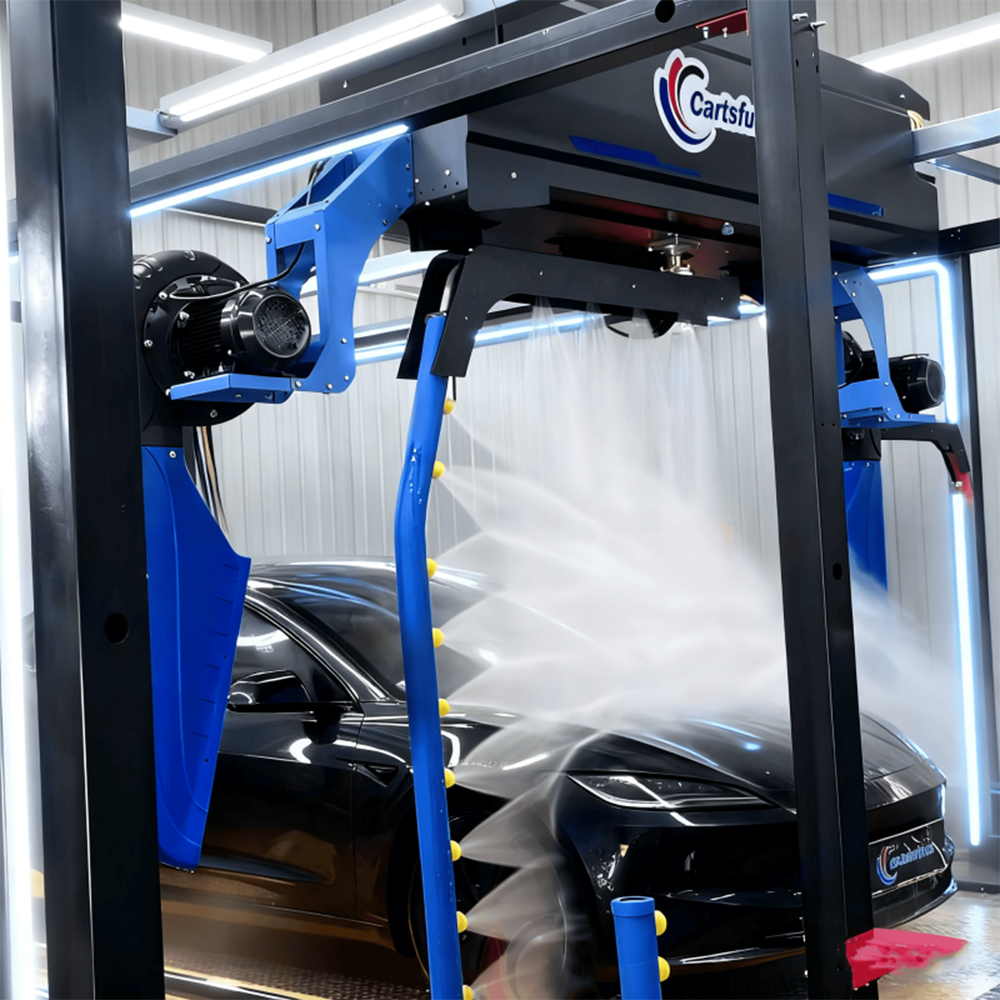
Option 1: Buying Directly from Manufacturers
Buying directly from the original equipment manufacturer (OEM) has its advantages, particularly for those who know exactly what they need.
✔ Pros:
Lower pricing: By cutting out the middleman, you typically get the best base price.
Access to the latest technology and R&D: You’re getting the product straight from its source.
Customization options: OEMs can often modify systems for unique site challenges.
Direct access to factory-trained technicians and engineers: For complex issues, this is invaluable.
❌ Cons:
May require more self-reliance: You might be coordinating installation, concrete work, and plumbing separately unless the OEM offers a full turnkey service.
Shipping and logistics complexity: If the manufacturer is overseas, you manage customs, duties, and potential delays.
Local service response time: If their nearest service center is hours away, a minor issue could cause major downtime.
Popular Manufacturers to Consider:
PDQ Manufacturing
Washworld Inc.
Istobal
[Your Company Name] (insert your brand here)
Buying direct is ideal for larger operators, multi-site owners, or experienced investors who have in-house project management capabilities and want maximum control over specifications.
Consideration #1: Throughput and Capacity Needs
One of the first and most critical questions to ask is: How many vehicles do you realistically expect to wash per hour during your peak periods? This isn’t just about averages; it’s about handling the Saturday morning rush without creating a line that discourages customers.
Key factors to evaluate include:
Cycle time per vehicle (industry average: 3–5 minutes): Does this include a thorough dry? A slower, more thorough wash might be perfect for a premium niche, while a 3-minute express model is needed for high-volume locations.
Number of bays or units needed: Is this a single-bay operation or a multi-bay tunnel setup? Your site size and traffic goals dictate this.
Peak traffic management: Can the system’s software help queue or manage peak flow? Some systems offer features to streamline back-to-back washes.
Backup and redundancy plans: What happens if one critical component fails? Systems with simpler designs or easier service access can minimize downtime.
A high-throughput system designed for 20 cars per hour might be overkill and unnecessarily expensive for a rural location averaging 8 cars per hour. Conversely, a low-capacity system in a busy urban area creates wait times that send customers to your competitor. Matching capacity to your specific, realistic business model is essential.
Consideration #2: Chemical Compatibility and System Design
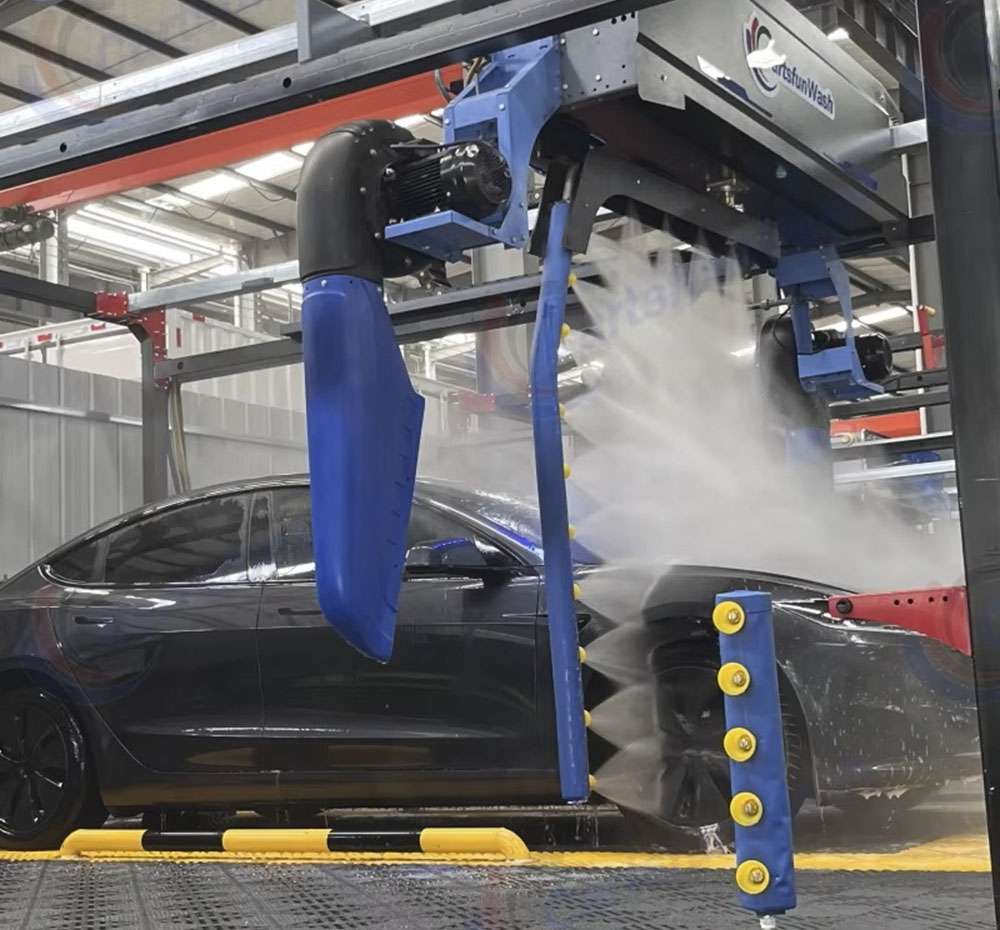
The “contactless” clean is achieved through chemistry and precision engineering, not brushes. Therefore, the system’s design and its synergy with cleaning chemicals are paramount. A poorly designed system will waste expensive chemicals and deliver mediocre results.
It’s critical to ensure your chosen system:
Supports a wide range of high-quality detergents and pre-soaks: You want the flexibility to choose chemical brands based on performance and local water conditions (hard vs. soft water).
Features precise, adjustable nozzles and spray arms: This ensures complete coverage and allows tuning for different vehicle shapes.
Has accurate, programmable chemical dilution control: This is the heart of efficiency and consistency. Precise dosing saves money and ensures the correct chemical strength every time.
Is engineered to minimize overspray, drift, and waste: This protects your site, saves on chemicals, and is better for the environment.
Integrates proper water pressure, temperature control, and an effective drying mechanism: These elements work in concert with the chemicals to achieve a fast, spot-free, and completely dry finish that customers equate with quality.
Consideration #3: Service and Support Availability
Even the most robust equipment will eventually need service. When it does, the quality and speed of the supplier’s support become the most important factor in your business. A machine down for a week can devastate your revenue and customer trust.
Key questions to vet your supplier include:
Is true 24/7 technical support available, or just an answering service?
What is the guaranteed average response time for critical repairs? (e.g., “We have a technician on-site within 4 hours in the metro area”).
Are common replacement parts stocked in regional warehouses? Long shipping times for simple parts are a major red flag.
Do they offer comprehensive on-site training for your staff and remote diagnostics capabilities? A supplier who trains you empowers you to handle minor issues quickly.
Choose a vendor with a verifiable track record in your region. Look for one with a network of trained technicians, not just a single point of contact. This infrastructure is what minimizes costly downtime and truly protects your investment over a 10-year period.
Consideration #4: Technology and Future-Proofing
The car wash industry is undergoing a digital transformation. Investing in a “dumb” machine today could leave you at a competitive disadvantage in just a few years. Future-ready equipment offers operational efficiency and a better customer experience.
Prioritize systems with modern features such as:
Advanced vehicle detection and profiling: Using sensors or AI to tailor the wash path to each car’s size and contour, saving water and chemicals.
Smart, adaptive chemical dosing systems that adjust based on soil level or temperature.
Seamless integration capabilities with mobile apps for payments, loyalty programs, and wash bookings.
Comprehensive remote monitoring and diagnostics that allow you and your supplier to see system health, consumption rates, and revenue data in real-time from anywhere.
A commitment to regular, inclusive software updates that add features and improve security over time.
Future-proofing isn’t about having every gadget; it’s about choosing a platform that can evolve, ensuring you stay ahead of competitors and continue to appeal to tech-savvy customers who expect digital convenience.
Consideration #5: Total Cost of Ownership (TCO)
The purchase price is just the entry fee. The Total Cost of Ownership (TCO) provides the full financial picture over 5-10 years, revealing which system is truly the better value. A cheaper unit with high operating costs can quickly become the more expensive option.
Major TCO components you must calculate include:
Initial equipment cost
Installation and site preparation (concrete, plumbing, electrical)
Ongoing energy and water consumption (varying greatly by efficiency)
Routine maintenance and potential repair costs
Chemical usage per vehicle (a major recurring cost)
Labor required for operation and oversight
Software subscription or update fees
Practical Example: Let’s say System A costs $60,000 but uses $1,500/month in utilities and chemicals. System B costs $90,000 but is highly efficient, using only $800/month in utilities and chemicals due to better pumps and reclaim technology.
System A 5-year TCO: $60,000 + ($1,500 x 60 months) = $150,000
System B 5-year TCO: $90,000 + ($800 x 60 months) = $138,000
Despite a 50% higher sticker price, System B has a lower 5-year TCO and saves you $12,000. Always insist on TCO projections when comparing quotes.
Making an Informed Decision for Your Business
Choosing the right contactless car wash equipment requires a balanced, systematic approach that weighs performance, reliability, forward-looking technology, and the complete financial picture—not just the initial price. Before finalizing your decision, commit to this due diligence:
Honestly assess your business model, target market, and realistic customer volume projections.
Compare at least 3 different systems and brands using a standardized scorecard based on these 5 considerations.
Request live demos or, better yet, visit existing installations to see the equipment in action and speak directly to current owners.
Talk to current users and read independent reviews to understand real-world performance and supplier reliability.
Get and meticulously compare detailed quotes that include a transparent TCO analysis, not just itemized equipment costs.
With the right equipment partner, you’ll do more than just purchase a machine—you’ll invest in a solution that delivers a superior, consistent wash experience, optimizes your daily operations, and drives sustainable long-term profitability for your business.
Get In Touch With Us



 English