

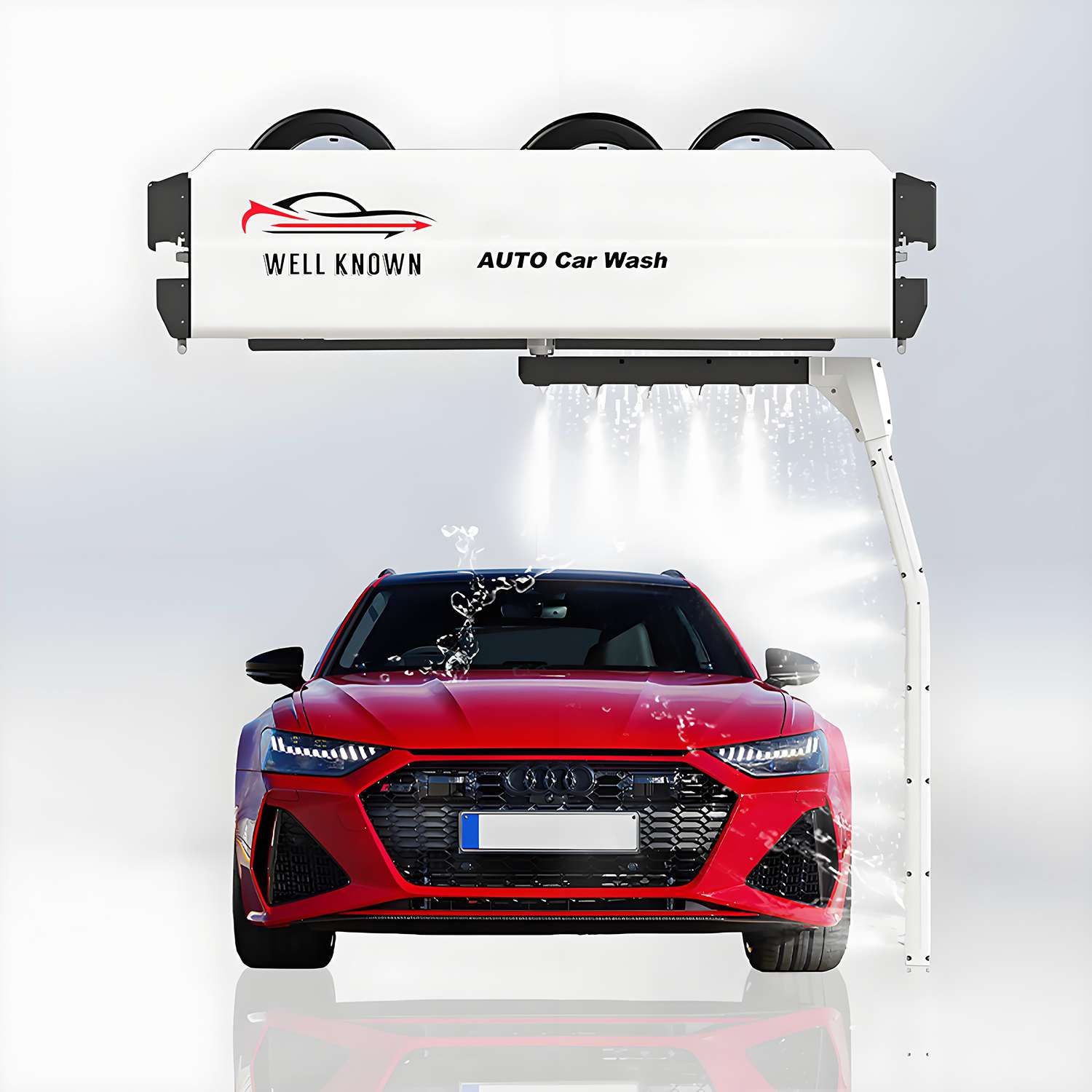
Yes, Touchless wash car washes are generally safe for car surfaces, particularly the paint and clear coat. The key advantage of touchless wash systems is that they operate without physical contact, which significantly reduces the risk of micro-scratches or swirl marks commonly caused by grit or abrasive brushes. Studies show that traditional car washes with brushes can cause 3 to 4 times more damage to the paint compared to touchless systems. With touchless wash, the absence of contact minimizes these risks.
However, to ensure optimal safety, it’s crucial to use high-quality, pH-balanced detergents. Detergents with a pH level of 7 (neutral) to 8 are considered ideal for car finishes, as they effectively break down dirt and grime without compromising the protective clear coat. Low-quality or overly alkaline detergents can strip the car’s protective layers, leading to potential fading or surface damage. Additionally, a well-calibrated wash cycle, including thorough rinsing, ensures that any detergent residues are properly removed, reducing the likelihood of chemical damage over time.
Safety advantages of touchless car washing
- Avoid physical contact damage
The touchless car washing machine uses high-pressure water guns and detergent sprays to complete the cleaning process. No physical contact tools such as brushes and rags are used throughout the process, which can effectively reduce problems such as scratches and friction damage on the car paint. It is especially suitable for car owners who have high requirements for car paint protection.
- Intelligent sensor anti-collision
The high-end equipment is equipped with laser positioning, infrared sensing and other technologies, which can accurately identify the shape and position of the vehicle to avoid collisions or scratches caused by misjudgment during the car washing process.
- Low risk of personnel operation
The touchless car washing machine has a high degree of automation and does not require direct human participation in the cleaning process, which reduces the risk of personal injury caused by improper operation in traditional car washing.
- Environmentally friendly and energy-saving design
The circulating water system and water-saving technology are used to reduce water waste, while avoiding direct contact between chemical detergents and the human body, improving environmental safety.
Potential risks and precautions
- Sand residues may damage the car paint
If there is sand on the surface of the car body that has not been thoroughly washed, the high-pressure water gun may press the sand on the car paint, and long-term use may cause fine scratches. It is recommended to choose professional cleaning agents containing decontamination ingredients and regularly check the uniformity of the equipment’s water spray.
- Equipment quality differences affect safety
Low-end equipment may not clean thoroughly due to problems such as insufficient water spray pressure and long flushing distance, requiring manual wiping and replenishment, increasing the risk of secondary damage. It is recommended to choose well-known brands and check user reviews.
- Restrictions on special stain treatment
For stubborn stains such as asphalt and bird droppings, the effect of touchless car washing is limited, and manual treatment or subsequent waxing care is required, otherwise the paint may be corroded due to residual stains.





 English